
English| EUR
Suggested for you
More currencies
Choose a language
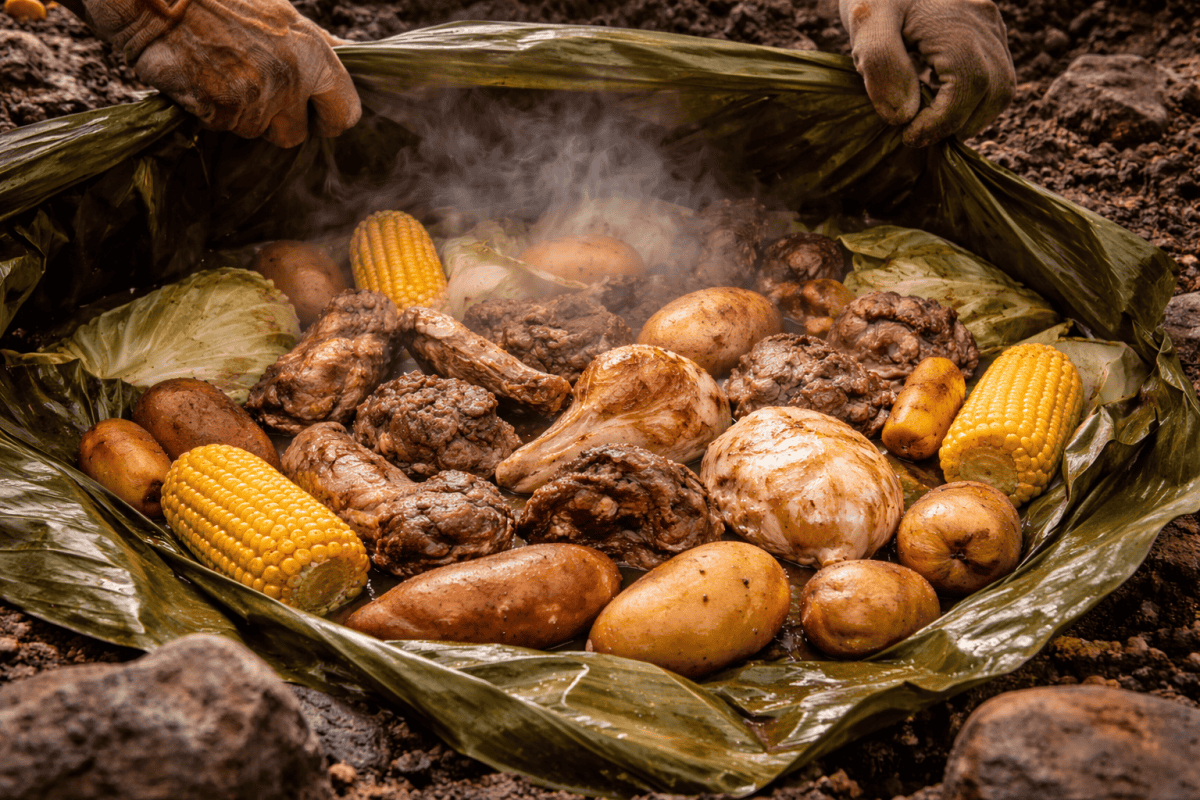
Mitai Maori Village serves food cooked the way Maori families have prepared feasts for centuries: buried in an earth oven and slow-steamed over heated stones. The hangi method defines traditional Maori food Rotorua visitors encounter during cultural experiences, transforming meat and vegetables into dishes that carry the geothermal legacy of the region.
Quick answer
Traditional Maori food at Mitai Village centers on hangi, an earth-oven cooking method where meat, kumara, and vegetables steam for hours in a pit lined with heated volcanic stones. The 155 NZD cultural experience includes a full hangi dinner alongside performances and village activities. Meals typically feature pork, chicken, lamb, kumara (sweet potato), potatoes, pumpkin, and stuffing, served communal-style after the evening's cultural program.
The geothermal heat beneath Rotorua's soil made hangi cooking practical long before European contact, and the method remains central to Maori gatherings today. What distinguishes traditional Maori food Rotorua experiences from restaurant dining is the process itself: food wrapped in leaves and cloth, lowered into a pit with stones heated to extreme temperatures, then covered with earth and left to steam for three to four hours. The result carries a smoky, mineral flavor that electric ovens cannot replicate. Mitai Village prepares its hangi daily using this traditional method, digging fresh pits each afternoon in volcanic soil that holds heat efficiently. The menu reflects what Maori communities served at hui (gatherings): proteins that absorb the earth-oven smokiness, root vegetables that soften without losing structure, and pumpkin that caramelizes under the steam. Kumara, the Polynesian sweet potato brought to New Zealand by early Maori settlers, anchors the meal as it did in pre-European diets when it served as a staple carbohydrate alongside fern root and seafood. The communal serving style at Mitai mirrors how hangi meals function in Maori culture: food shared from common platters, portions generous enough to feed extended family groups, and the unveiling of the pit treated as a ceremonial moment. Visitors watch staff lift the earth covering and unwrap the steaming baskets, releasing the mineral-tinged aroma that signals the meal is ready. This theatrical element is not added for tourism—it reflects how hangi preparation naturally draws a crowd, the uncovering becoming a focal point of any gathering. Authentic Maori cuisine in Rotorua extends beyond the proteins and starches on the plate. It includes rewena bread (potato-based sourdough), watercress from local streams, and occasionally eel or freshwater fish when seasonal availability aligns with the menu. Mitai's version emphasizes accessibility for international visitors while preserving the core techniques, meaning the spice levels remain mild and the vegetable selection leans toward familiar varieties rather than native foraged greens like pikopiko (fern shoots) that require specialized sourcing.
“The geothermal heat beneath Rotorua's soil made hangi cooking practical long before European contact, and the method remains central to Maori gatherings today.”
The Hangi cooking process is a foundational element of Maori culinary tradition, utilizing the natural heat of the earth to prepare food. This method relies on a precise combination of geothermal principles and communal preparation.
The hangi is an ancient technique known as umu, which involves cooking food in a pit excavated into the ground.
Large volcanic rocks are placed in the pit and heated by a wood fire until they reach a high temperature.
Food items such as root vegetables and seasoned meats are placed in baskets and positioned directly over the hot stones.
Water is poured over the stones to create steam, and the pit is sealed with wet cloths and layers of earth to trap the heat.
The cooking process typically lasts for several hours, allowing the steam to gently cook the ingredients while infusing them with an earthy flavor.
The practice of hangi preparation remains a communal activity that emphasizes patience, sharing, and the connection to the land.
The evening cultural experience at Mitai follows a structured three-hour format, guiding visitors through traditional protocols, live demonstrations, and the communal Hangi feast. Most experiences begin around 18:00, though arrival 15–20 minutes early is recommended.
The evening opens with a traditional Māori welcome on the village grounds, including wero (warrior challenge) and karanga (ceremonial call). Expect 20–25 minutes of protocol before moving to the next station.
Guides unearth the Hangi pit and explain how meat and vegetables steam underground for hours using heated stones. You'll observe the process from a viewing area, though the food itself was prepared earlier in the day.
Move indoors to the meeting house for poi, haka, and waiata sung by the resident cultural group. Seating is communal on tiered benches; the performance runs 35–40 minutes.
The feast is served buffet-style in the dining hall—expect slow-cooked lamb, pork, kumara, and pumpkin alongside salads and bread. Queue times vary with group size; allow 60–75 minutes for the meal and mingling.
Most visitors finish by 21:00, giving time to collect belongings and arrange transport. Evening experiences do not include daytime forest or glow-worm components offered by other Rotorua operators.
Mitai Maori Village operates on a consistent schedule throughout the week to accommodate visitors interested in traditional Maori food and cultural experiences.
Mitai Maori Village is located at 196 Fairy Springs Road, Fairy Springs, Rotorua 3015, New Zealand. The site is easily accessible by road from the Rotorua city center.
Follow Fairy Springs Road north from Rotorua City center
CityRide Rotorua Route 1 to Fairy Springs Road
Direct service from Rotorua accommodation
Ample parking is available on-site for visitors arriving by car. Plan your arrival within the best arrival window of 08:00–17:00 to prepare for your evening cultural experience.
Everything you need to know about traditional maori food rotorua
Traditional maori food rotorua centers on the hangi, a cooking technique using heated stones buried in an earth oven. This method imparts a distinct, smoky flavor to meats and root vegetables. It remains a cornerstone of the dining experience at Mitai Maori Village. Visitors seeking authentic local cuisine often prioritize this cultural feast during their travels.
The entrance fee is 155 NZD, which covers the full cultural experience including the hangi dinner. This flat rate ensures guests can participate in all scheduled performances and the traditional meal service. Bookings should be made in advance to confirm your spot. Prices are consistent for adults visiting the site.
The best arrival window is 08:00–17:00, though evening cultural experiences typically start later. Checking in early allows visitors to settle in before the main festivities begin. Our business hours are 08:00–18:00 daily to assist with your planning. Guests are encouraged to adhere to this schedule for a smooth start to the evening.
While the focus is on traditional maori food rotorua, the kitchen staff strives to accommodate common dietary requirements when notified in advance. Please ensure you provide any specific needs during the booking process. This allows the team to prepare suitable alternatives for your meal. Most guests find the menu to be quite inclusive.
The cooking process involves placing baskets of food over stones heated in a pit, which is then covered to trap the heat. This slow-cooking method is a defining feature of the maori culinary heritage found in the region. Many visitors consider this experience a highlight of their time in New Zealand. It is an ancient practice that continues to be honored today.
Yes, the village is open for guests daily from 08:00–18:00. While the primary dining experience occurs in the evening, visitors can engage with the site during the day. We recommend planning your arrival based on the scheduled activities you wish to attend. You can reach the site directly at 196 Fairy Springs Road.